
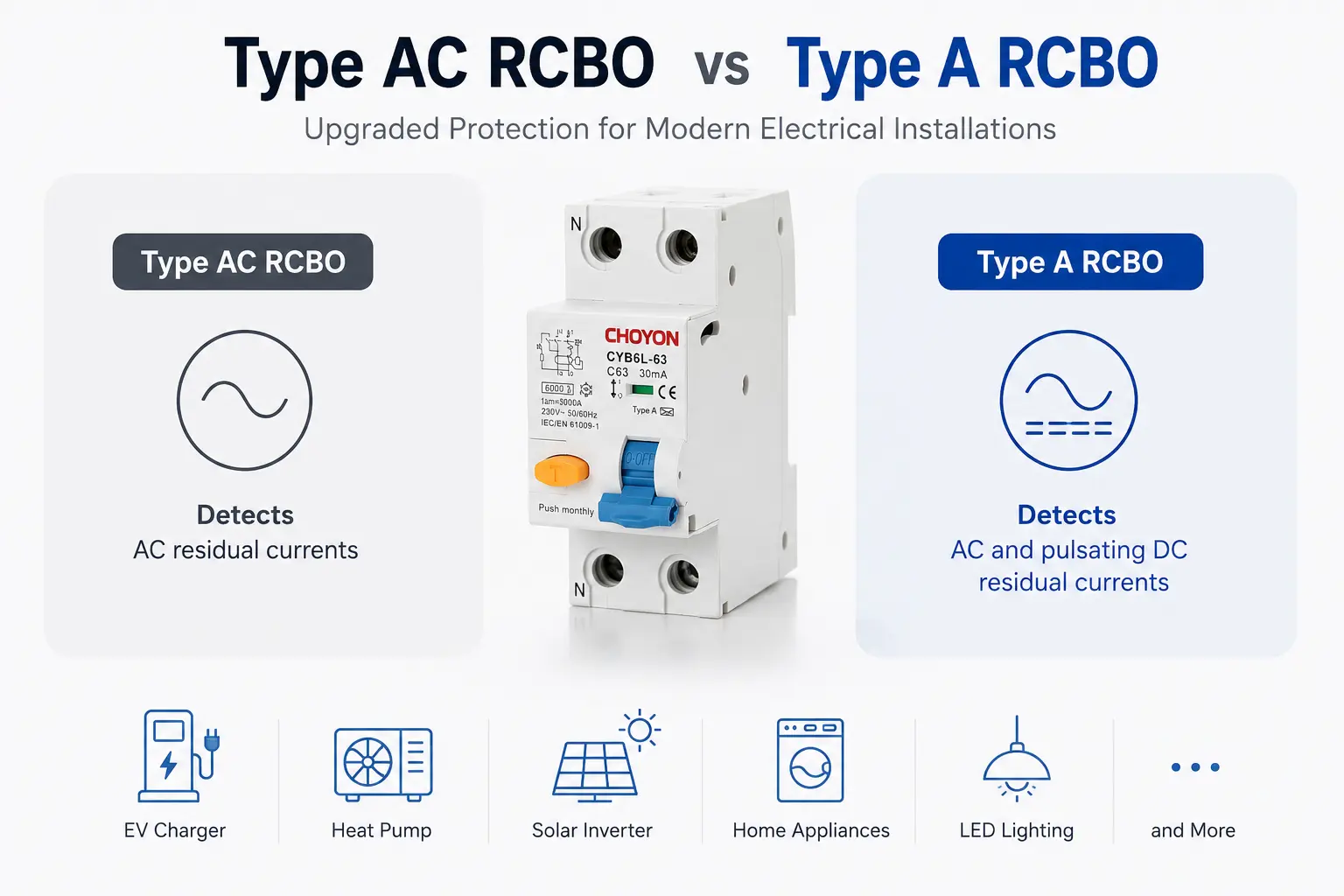
For many years, Type AC RCBOs were the standard choice in many European markets.
Today, however, more distributors, electrical brands, and contractors are gradually shifting toward Type A RCBOs.
This change is not driven by a single regulation. Instead, it reflects the growing number of electronic devices used in modern electrical installations.
Why Was Type AC RCBO the Standard?
Type AC RCBOs are designed to detect sinusoidal AC residual currents while also providing overload and short-circuit protection.
For traditional electrical installations with mainly resistive loads, Type AC RCBOs were sufficient for most residential applications.
They were widely available, familiar to installers, and often offered at a lower cost.
For many years, they became the default choice across numerous European markets.
What Has Changed in Modern Installations?
Today’s electrical systems are very different from those installed twenty years ago.
Homes and commercial buildings now commonly include:
- EV chargers
- Heat pumps
- Solar inverters
- LED lighting
- Variable-speed drives
- Induction cooking appliances
- Smart home systems
Many of these devices contain electronic components that may generate pulsating DC residual currents.
As electronic loads become more common, protection devices also need to adapt.
Why Is Type A RCBO Becoming More Popular?
Unlike Type AC, Type A RCBOs can detect both sinusoidal AC residual currents and pulsating DC residual currents.
This makes them suitable for a much wider range of modern electrical applications.
For distributors, offering Type A RCBOs is increasingly seen as a way to meet changing market demand rather than simply replacing an existing product.
Many European brands have already expanded their Type A product lines to better match today’s electrical installations.
Is Type AC RCBO Still Used?
Yes.
Type AC RCBOs are still available and may remain suitable for certain traditional applications where permitted by local standards and installation practices.
However, as electronic equipment becomes increasingly common, more projects are specifying Type A RCBOs instead.
The overall market direction is clearly moving toward broader protection capabilities.
What Does This Mean for Electrical Distributors?
For distributors and private-label brands, this trend is more than a technical discussion.
It influences product planning, inventory decisions, and future market competitiveness.
Questions worth considering include:
- Is demand for Type A RCBOs increasing in your market?
- Are installers requesting Type A more frequently than before?
- Does your current product range reflect the changing needs of modern installations?
Understanding these trends can help distributors prepare for future demand instead of simply reacting to it.
Final Thoughts
The transition from Type AC to Type A RCBOs reflects how electrical installations are changing across Europe.
As electronic equipment becomes more common, the demand for protection devices capable of handling a wider range of residual current characteristics continues to grow.
For manufacturers, distributors, and electrical brands, keeping pace with this transition is an important step toward building a product portfolio that meets the needs of tomorrow’s installations.
